A PhD can be an exciting opportunity to develop expertise and contribute original knowledge. However, even highly capable students can struggle when they develop habits that undermine research progress. Some mistakes are obvious, such as missing deadlines. Others are less visible: reading endlessly without writing, avoiding difficult conversations or confusing a busy schedule with meaningful progress.
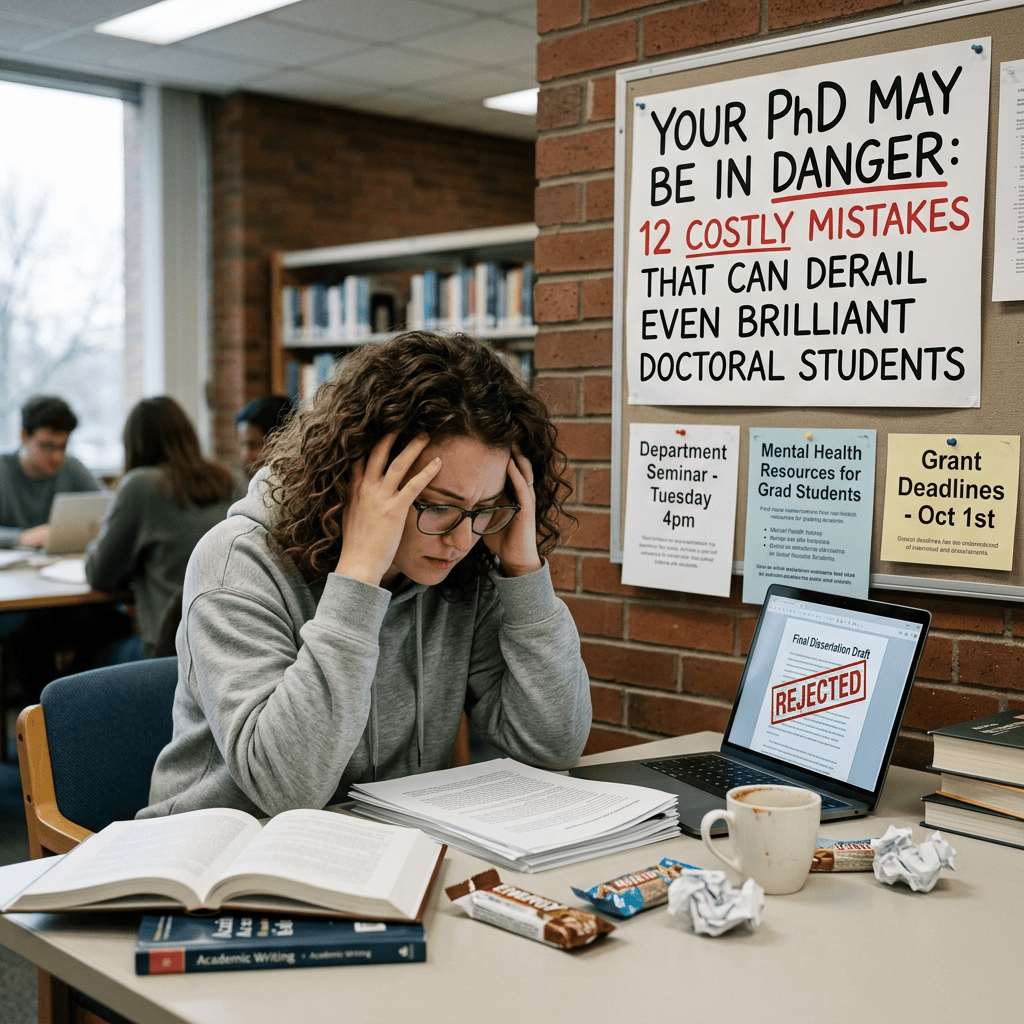
Here are 12 mistakes to avoid and practical ways to address them.
1. Treating a PhD like an undergraduate degree
Doctoral research requires increasing independence. Students cannot rely entirely on lecturers or supervisors to define every task.
Better approach: Take responsibility for setting research priorities, identifying problems and preparing for supervision meetings.
2. Confusing activity with progress
Attending events, reading papers and organising files can feel productive, but these activities do not necessarily move the thesis forward.
Better approach: Set measurable weekly outputs, such as completing an analysis, drafting a section or resolving a methodological issue.
3. Reading endlessly
Some students delay writing because they believe they must read everything before developing an argument.
Better approach: Read strategically. Identify what each source contributes to your research question and begin drafting while the literature review develops.
4. Changing research direction too frequently
Research questions may evolve, but repeated changes without a clear reason can waste time and create an unmanageable project.
Better approach: Discuss major changes with your supervisor and evaluate their effect on scope, methods, data, ethics and completion time.
5. Avoiding difficult conversations with supervisors
Silence does not resolve disagreements, unclear expectations or delayed feedback.
Better approach: Raise concerns respectfully, provide specific examples and suggest practical solutions. If informal discussion does not resolve a serious issue, consult the appropriate departmental or graduate-school process.
6. Ignoring methods training
A student may have a strong research idea but lack the skills needed to execute it rigorously.
Better approach: Identify skills gaps early. Seek training in statistics, qualitative analysis, laboratory methods, programming, archival research or other relevant techniques.
7. Delaying writing
Leaving most writing until the final year can create unnecessary pressure.
Better approach: Write regularly. Draft methods, literature summaries, analytical memos and chapter sections throughout the project.
8. Taking feedback personally
Academic criticism is usually directed at the work, not the student’s worth or intelligence.
Better approach: Separate comments from emotions. Identify what needs revision, ask for clarification where necessary and keep track of repeated feedback.
9. Neglecting academic networks
Working in isolation can limit opportunities to receive feedback, discover collaborations and learn about academic careers.
Better approach: Attend seminars, join relevant research communities and build professional relationships. Networking should be genuine and based on shared academic interests.
10. Using AI tools irresponsibly
AI tools may help with brainstorming, language editing or organising information, but they can also generate inaccurate references, fabricated claims or inappropriate text.
Better approach: Follow institutional rules, verify every factual claim and reference, protect confidential information and disclose AI use where required. Never submit generated material as original research without appropriate human review and compliance with university policy.
11. Prioritising publication quantity over research quality
The pressure to publish can lead students to target unsuitable journals or divide research into weak, repetitive papers.
Better approach: Prioritise rigorous research and appropriate journals. Check editorial standards, peer-review processes, publication fees and indexing claims before submitting.
12. Having no plan beyond the thesis
A PhD can be demanding enough that students postpone career planning until submission.
Better approach: Explore academic, industry, public-sector and non-profit careers during your doctorate. Build transferable skills and seek relevant experience without allowing extra activities to undermine thesis progress.
A practical weekly routine for doctoral students
A sustainable routine could include:
- Research planning: Identify the week’s most important objectives.
- Focused research: Protect uninterrupted time for data collection, analysis or reading.
- Writing: Produce or revise a small piece of text regularly.
- Supervision preparation: Record questions and progress before meetings.
- Professional development: Attend selected seminars or training sessions.
- Review: Assess what was completed and adjust the next week’s plan.
The exact routine should reflect your discipline, research stage, responsibilities and personal circumstances.
What to do if you recognise these mistakes
Do not try to change everything at once. Identify the two or three habits causing the greatest difficulty and agree on specific improvements.
Discuss significant research problems with your supervisor. If you need additional help, use your university’s research training, student support, counselling or academic development services as appropriate.
Final thoughts
A successful PhD is not built on perfection. It develops through consistent work, sound research decisions, constructive feedback and the ability to correct mistakes.
The earlier you identify unhelpful habits, the more time you have to improve your research experience.
Stay connected with Scholars Careers
Subscribe to Scholars Careers for practical guidance on doctoral research, thesis writing, academic publishing, research funding and career development.
Follow our updates and share this article with PhD students and early-career researchers. A small change in working habits can make a meaningful difference to someone’s research journey.
Disclaimer: This article is intended for general educational purposes and does not replace institutional regulations, supervision or professional advice. Requirements for research, thesis submission, AI use, publication and academic conduct differ between universities and disciplines. Students should consult their institution’s current policies and seek appropriate support when facing academic or personal difficulties.


