A PhD is one of the most demanding academic journeys a person can undertake. It requires independent research, sustained concentration, critical thinking, academic writing and the ability to respond to uncertainty. Although many doctoral candidates complete their degrees successfully, others experience serious delays, lose motivation, change direction or fail to meet the requirements for their doctorate.
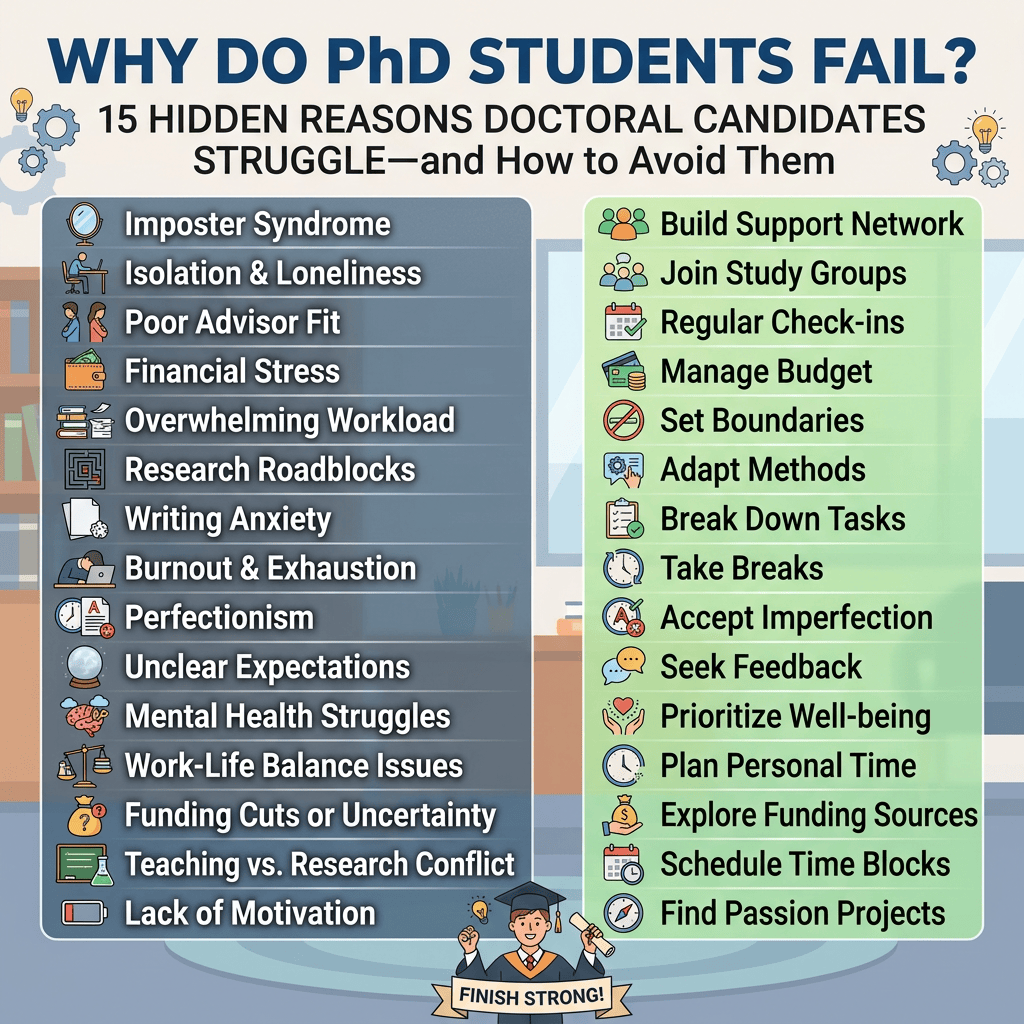
PhD difficulties are rarely caused by a lack of intelligence alone. More often, they arise from a combination of research, supervision, planning, financial and personal challenges.
Understanding these risks early can help doctoral students take practical steps to protect their progress.
1. Starting without a clear research question
A vague research topic can lead to months of reading without a clear direction.
A doctoral project needs a focused question that is significant, researchable and appropriate for the degree. Discuss the scope with your supervisor and revise it as your understanding develops.
2. Choosing an unrealistic research topic
Some projects are too broad, too expensive, too technically demanding or dependent on data that may be inaccessible.
Assess feasibility early. Consider the time available, research skills, resources, ethical approval and likely access to participants, equipment or archives.
3. Poor communication with supervisors
Students who avoid discussing difficulties may allow small problems to become serious obstacles.
Agree on meeting arrangements, expected progress and preferred communication methods. Raise concerns early and keep a record of agreed actions.
4. Ignoring feedback
Feedback is an essential part of doctoral development. Repeatedly submitting work without addressing earlier comments can undermine progress.
Keep a feedback log and identify recurring issues. If you disagree with a suggestion, discuss your reasoning respectfully and with evidence.
5. Weak time management
A PhD contains many tasks that compete for attention: reading, data collection, analysis, writing, training, teaching and administration.
Break the project into manageable milestones. Use a realistic weekly schedule and review progress regularly.
6. Reading endlessly without producing work
Reading is necessary, but it should support research decisions and writing.
Set a purpose for each reading session. Record key arguments, methods, findings and limitations. Turn your notes into a structured literature review rather than collecting disconnected summaries.
7. Using unsuitable research methods
A weak or poorly justified methodology can compromise the entire project.
Ensure that your research design answers the research question. Seek training or specialist advice where necessary, and document methodological decisions.
8. Delaying writing until the end
Many students treat writing as the final stage of research. This can create a huge workload near submission.
Write throughout the doctorate. Draft literature reviews, methods sections, research notes and analytical summaries as the project develops.
9. Failing to manage data and research records
Poor record-keeping can cause lost information, inconsistent analysis and problems demonstrating research integrity.
Use secure storage, clear file names, documented procedures and appropriate backups. Follow institutional data management and ethics requirements.
10. Neglecting research ethics
Failure to obtain required approval or follow ethical procedures can create serious academic consequences.
Understand your institution’s ethics process before collecting data. Obtain required permissions and maintain accurate consent and research records.
11. Working in isolation
Doctoral research can be lonely, particularly when students work independently or remotely.
Attend seminars, join research groups, participate in writing sessions and build relationships with other researchers. Academic communities can provide feedback, encouragement and useful professional connections.
12. Underestimating financial pressure
Financial uncertainty can affect concentration and research progress.
Prepare a budget, understand the terms of your funding and seek advice early if your circumstances change. Explore legitimate institutional support, hardship funds or extensions where appropriate.
13. Ignoring personal wellbeing
Long periods of stress, poor sleep and excessive workloads can make academic work harder.
Develop sustainable routines, take breaks and seek appropriate support when difficulties affect your wellbeing. Universities may provide counselling, student support and occupational health services.
14. Misunderstanding doctoral examination requirements
Students sometimes focus on producing large amounts of work without checking what the degree actually requires.
Read your institution’s doctoral regulations, assessment criteria and thesis guidance. Ask your supervisor or graduate school how originality, contribution and examination are assessed in your discipline.
15. Leaving submission preparation too late
Formatting, references, permissions, proofreading and administrative checks take time.
Create a submission checklist well before your intended deadline. Confirm procedures for examination, thesis deposit and any required corrections.
Warning signs that your PhD needs attention
Take action if you notice that:
- You cannot explain your current research question clearly.
- You repeatedly miss agreed milestones.
- You have not discussed major problems with your supervisor.
- Your research design is no longer feasible.
- You have stopped writing for long periods.
- You are uncertain about institutional requirements.
- Your wellbeing or finances are seriously affecting your work.
These signs do not mean that failure is inevitable. They indicate that it may be time to seek advice and revise your plan.
What to do if you are falling behind
Start by identifying the main cause. Is it an unclear project, lack of training, supervision difficulties, data access, financial pressure or personal circumstances?
Then agree on a recovery plan. This may involve narrowing the research question, changing methods, arranging additional supervision, accessing training or discussing an extension through the appropriate university process.
Final thoughts
Completing a PhD requires more than intelligence and hard work. It requires realistic planning, effective communication, research discipline and the willingness to seek support.
Recognising problems early can make a substantial difference to your doctoral experience.
Stay connected with Scholars Careers
Subscribe to Scholars Careers for more practical advice on PhD completion, academic writing, research methods, publishing and university careers.
Follow our updates and share this article with doctoral candidates, supervisors and research students. Someone in your academic community may find these suggestions useful.
Disclaimer: This article is for general educational purposes and does not replace advice from your university, supervisor or qualified professional. It is not medical or psychological advice. PhD regulations, support services and examination requirements vary between institutions. Students experiencing serious academic, financial or wellbeing difficulties should contact the appropriate university support service or qualified professional.


